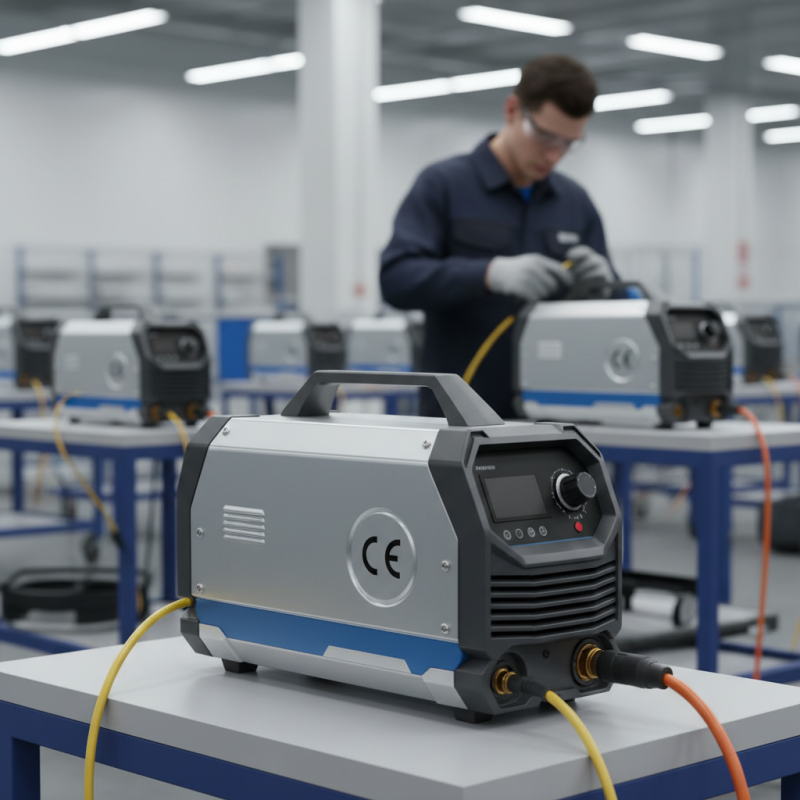
In the manufacturing world, getting CE certification really carries a lot of weight. For factories making top-notch Welding Inverters, it’s more than just a badge on the product. It’s a sign that they’re sticking to European safety standards. Basically, CE tells folks that the product meets important health and environmental rules. And honestly, that kind of trust is priceless—customers and partners alike feel more confident when they see it.
Take companies like PowerTech Industries, for example—they’re serious about quality. They don’t cut corners; instead, they pour resources into thorough testing and strict quality checks. But let’s be real, getting certified isn’t a walk in the park. Lots of manufacturers struggle to fully grasp what’s needed and how to meet those standards. It takes skill, patience, and real dedication to get that certification.
Winning CE certification can really boost a factory’s reputation. But, let’s face it, not everyone finds it easy. Starting this process is a big commitment, and it really shows that a company cares about making high-quality, reliable Welding Inverters. In the end, aiming for that certification isn’t just about the badge — it’s about genuinely making products you can stand behind and that customers can trust.
What is CE Certification in Welding Equipment Manufacturing?
CE certification is crucial in the welding equipment manufacturing industry. It signifies that a product meets European safety, health, and environmental protection standards. This certification is not just a formality; it enhances the credibility of welding inverters and assures users of their quality and performance. Manufacturers must ensure their products undergo rigorous testing to comply with CE requirements.
In welding equipment, CE certification involves several evaluations. These include assessing electrical safety, electromagnetic compatibility, and mechanical stability. All factors contribute to overall equipment reliability. Without proper certification, manufacturers may face legal challenges. It’s essential to keep documentation well organized during the process. Unclear records can lead to delays or failures in obtaining CE certification.
Tips: Always engage with an experienced consultant. Their insights can streamline the certification process. Regularly update training for your team on compliance standards, as regulations can change. This proactive approach fosters a better understanding of safety protocols. Ultimately, focusing on CE certification enhances the safety and quality of your products in a competitive market.
Importance of CE Certification for Welding Inverters
CE certification plays a crucial role in the quality assurance of welding inverters. This certification signals compliance with European safety standards. Manufacturers of welding machines recognize its significance in gaining market trust. It shows that their products have passed rigorous quality checks. Inverters that are CE certified are often seen as safer and more reliable.
The importance of CE certification extends beyond compliance. It helps manufacturers enhance their quality control processes. As a result, welding machines designed under these guidelines typically offer better performance. However, obtaining CE certification can be challenging. Manufacturers must invest time and resources to meet all requirements. There are instances where companies face issues during the certification process. This often reflects on their commitment to quality.
Without CE certification, the market could be flooded with subpar welding machines. This raises safety concerns. Reliable welding inverters ensure not just efficiency, but also operator safety. The absence of such certification may lead to increased accidents and equipment failures. It’s essential for manufacturers to reflect on their certification processes regularly. Continuous improvement is vital for maintaining safety and quality in welding technology.
Importance of CE Certification for Welding Inverters
Key Requirements for Achieving CE Certification
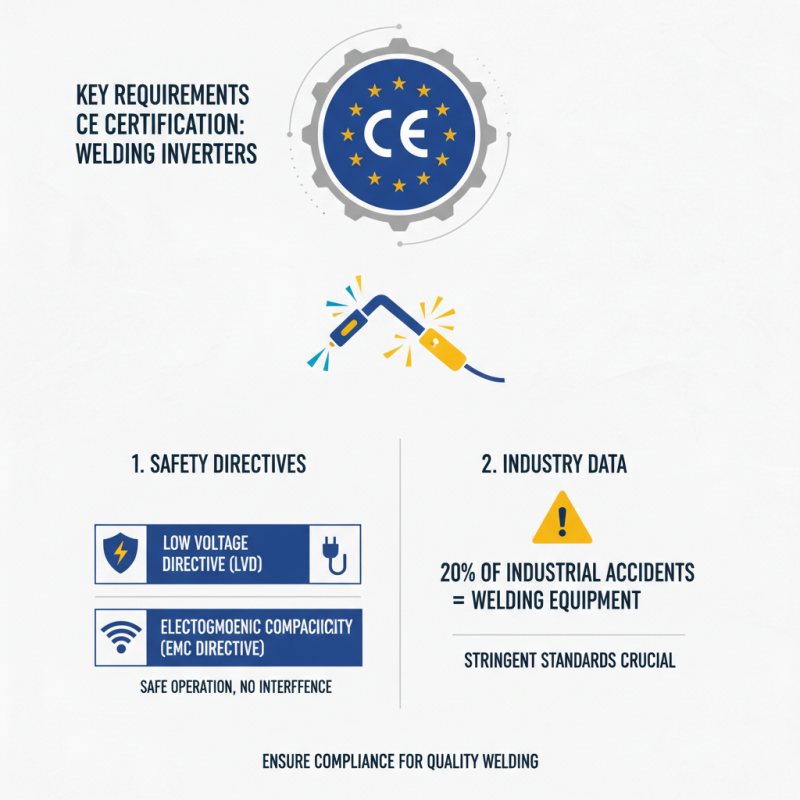
Achieving CE certification for high-quality welding inverters involves understanding key requirements. First, products must comply with safety directives, notably the Low Voltage Directive (LVD) and the Electromagnetic Compatibility (EMC) Directive. These directives ensure that equipment operates safely and does not interfere with other devices. According to a recent industry report, welding equipment contributes to 20% of all industrial accidents, highlighting the need for stringent safety standards.
Additionally, documentation is critical. Manufacturers must maintain technical files that include design specifications and test results. This transparency helps ensure that every aspect of the product aligns with CE standards. A considerable portion of non-compliance can be traced back to inadequate documentation practices. For instance, studies show that 30% of firms fail to provide sufficient evidence during CE audits, leading to delays in certification.
Regular testing is another essential aspect. Continuous checks of welding performance, including Welding Mig Welding processes, assure quality and reliability. The European Committee for Standardization recommends regular assessments at designated intervals. Many companies overlook these assessments, which can compromise certification status. Even minor lapses in these areas can significantly impact market competitiveness and customer trust.
Steps to Obtain CE Certification for Welding Inverters
Obtaining CE certification for welding inverters involves several critical steps that manufacturers must navigate. The process begins with understanding the essential requirements of the CE marking, which ensures products meet European safety and environmental standards. According to industry reports, failure to comply can result in significant market access issues. In 2022, nearly 40% of manufacturers faced challenges related to compliance, emphasizing the importance of thorough preparation.
One of the key steps is conducting a risk assessment. This assessment identifies potential hazards associated with the Welding Welding Machine. Manufacturers need to evaluate factors such as electrical safety and electromagnetic compatibility. If deficiencies are found, corrective actions must be implemented. In a recent case study, a factory noted that 25% of their products initially failed the risk assessment, highlighting the need for vigilance and attention to detail.
Next, proper documentation is essential. Manufacturers must compile a technical file containing design specifications, test results, and declarations of conformity. Studies indicate that nearly 30% of applications are delayed due to incomplete documentation. Engaging experienced professionals in this phase can help streamline the process. Ultimately, securing CE certification not only enhances product credibility but also improves market competitiveness. However, the journey is not without its complexities. Continuous evaluation and adjustments are necessary to keep pace with evolving standards.
Impact of CE Certification on Product Quality and Safety
CE Certification plays a crucial role in ensuring product quality and safety for welding inverters. This certification indicates that a product meets European safety standards. It affects both the manufacturer and the end user. Without CE certification, a product might pose safety risks.
The impact of CE certification is significant. It reassures users about the safety of the equipment they operate. A certified welding inverter should provide reliable performance, reducing the risk of accidents. However, achieving this certification requires rigorous testing and continuous improvements from manufacturers. Some factories may rush through this process to save time or costs.
Moreover, this certification can influence product marketability. Customers often prefer certified products over uncertified ones. Yet, not all manufacturers fully understand the requirements of CE certification. They may overlook important aspects, thinking they can cut corners. This sometimes leads to quality issues down the line. Investing in the certification process is essential for long-term success.
What is CE Certification for High-Quality Welding Inverters Factory? - Impact of CE Certification on Product Quality and Safety
| Dimension |
CE Certified Products |
Non-CE Certified Products |
| Quality Assurance |
High standards of materials and testing |
Varied quality, potential for substandard materials |
| Safety Compliance |
Compliance with EU safety directives |
May not meet essential safety requirements |
| Market Access |
Able to sell in the European Economic Area (EEA) |
Limited access to European markets |
| Consumer Trust |
Higher consumer confidence |
Lower consumer trust |
| Cost Implications |
Higher initial costs but potentially lower long-term liability |
Lower initial costs but higher risk of recalls and damages |
| Regulatory Inspections |
Regular inspections and audits |
Less frequent oversight |
Common Challenges in the CE Certification Process
CE certification is vital for high-quality welding inverter manufacturers. However, navigating the certification process can be challenging. Common issues arise at various stages. Manufacturers often struggle to meet safety and health requirements. Inadequate documentation can derail progress. Organizations may overlook critical testing protocols, leading to delays and increased costs.
Another major hurdle is technical conformity. Each welding inverter must adhere to specific EU directives. This demands a thorough understanding of engineering standards. Misinterpretations of these standards can lead to significant design flaws. Manufacturers must embrace rigorous quality control and adopt a systematic approach to the certification process. This can seem daunting, but proper training and expert guidance can ease the burden.
In the realm of Mig Welding, the complexity increases further. Compliance with electromagnetic compatibility (EMC) directives is essential. Many manufacturers underestimate the importance of EMC testing. A failure to address these aspects can result in poor product performance. This not only affects certification but can damage a brand's reputation. Careful preparation and expert insight can help mitigate risks and pave the way for successful CE certification.
Benefits of CE Certification for Manufacturers and Consumers
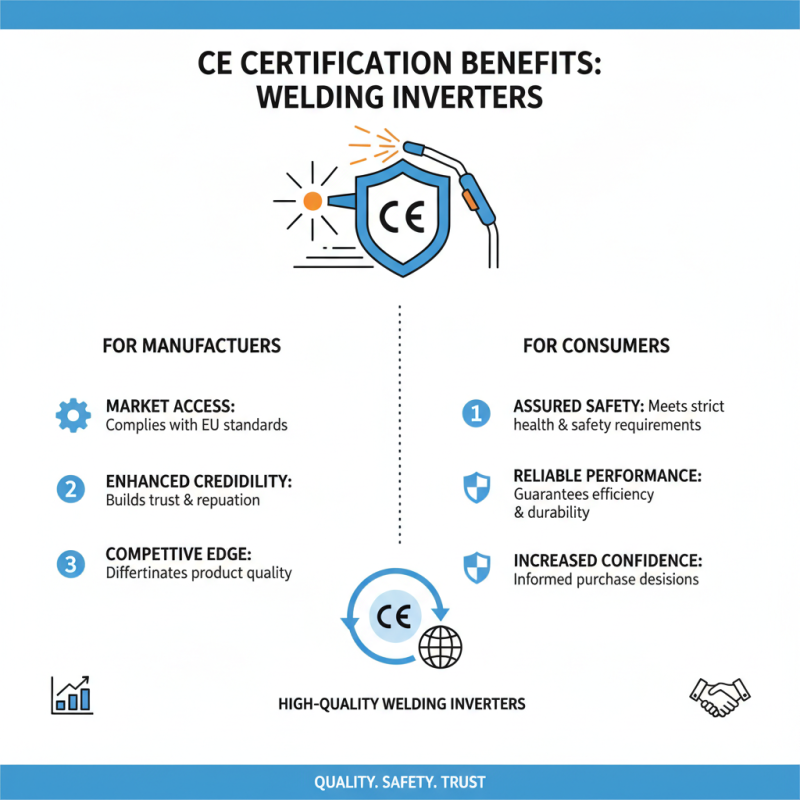
CE certification for high-quality welding inverters plays a crucial role in the manufacturing sector. For manufacturers, achieving this certification demonstrates adherence to strict European safety and quality standards. This boosts their credibility in a competitive market. Consumers benefit from greater assurance about the safety and efficiency of the products they purchase. Knowing that a product meets CE standards can foster trust and lead to increased customer satisfaction.
The certification process involves rigorous testing and compliance checks. Manufacturers must ensure their products are safe and efficient. However, not all manufacturers are fully informed about these requirements. Some may overlook essential aspects, leading to delays or failures in certification. This highlights the need for continuous education and awareness in the industry. Keeping abreast of CE certification requirements can enhance product design and functionality.
For consumers, CE certification reduces risks associated with low-quality products. It acts as a guarantee that the welding inverters adhere to health and environmental protection guidelines. Yet, some consumers may not fully understand what CE certification entails. This gap in knowledge could result in purchasing subpar products. As a result, both manufacturers and consumers must prioritize education around CE standards to ensure quality and safety in welding equipment.
Innovative Applications and Advantages of High-Precision Laser Welding Machines in Metal Fabrication Industries
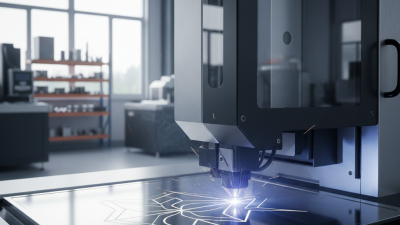
High-precision laser welding machines have revolutionized the metal fabrication industry, offering innovative applications that enhance productivity and quality. These advanced machines are designed to deliver efficient and high-precision welding solutions, capable of working with a diverse array of metals. Their versatility is one of their most significant advantages, making them suitable for various welding processes such as heat conduction welding, deep penetration welding, spot welding, and more. This adaptability not only meets the specific requirements of different projects but also allows manufacturers to streamline their operations, achieving both precision and speed.
Equipped with the ability to operate in both continuous and pulsed laser output modes, these machines can accommodate different working environments and production demands. Whether it's for small-scale precision processing or large-scale mass production, the high-precision laser welding machine is engineered to provide reliable performance. As industries increasingly demand higher quality and efficiency, the adoption of advanced laser welding technology becomes essential for businesses looking to maintain competitiveness in the modern manufacturing landscape. The integration of such technology signifies a move towards more innovative, efficient, and precise welding solutions that are becoming the industry standard.
Conclusion
CE certification is a crucial aspect in the manufacturing of welding inverters, ensuring that these devices meet the essential health, safety, and environmental protection standards set by the European Union. This certification not only enhances the credibility of manufacturers but also plays a significant role in guaranteeing product quality and safety for consumers.
To achieve CE certification, manufacturers must comply with specific requirements, undergo a systematic process, and address common challenges that arise during certification. The benefits of obtaining CE certification extend beyond regulatory compliance, fostering greater trust among consumers and potentially opening up new markets for manufacturers. Overall, CE certification serves as a vital measure for the quality assurance of welding inverters, reinforcing their role in safe and efficient welding practices.


 Contact Phone